Buildings of any purpose and intent perform best with superior fire resistant roofing materials. Understanding the breakdown of materials and fire rating classes is necessary to ensure adequate protection and security. Below, we provide all you need to know about the different materials and their classes.Fire resistance is one of the most important — and most misunderstood — factors in commercial roofing. The right material does more than meet a building code requirement. It protects your inventory, your equipment, your employees, and your entire operation in the event of a fire, whether that fire starts inside the building or outside it.
This guide breaks down how fire ratings work, corrects some common misconceptions about which materials fall into which category, and gives you a clear picture of the best fire-resistant options available for commercial roofs today.
Understanding Fire Ratings: Class A, B, and C
The fire resistance of roofing materials is rated by three classifications established by ASTM International and recognized by building codes across the United States. These ratings are based on standardized testing that measures how a material responds to flame spread, fire penetration, and burning brand exposure.
Class A — Highest Fire Resistance
Class A materials offer the strongest protection against severe fire exposure. They are the standard for commercial buildings and are required by code in many jurisdictions, particularly in fire-prone regions or densely developed areas. Class A materials resist flame spread, prevent fire from penetrating the roof deck, and do not produce flaming brands that can ignite surrounding structures.
Class B — Moderate Fire Resistance
Class B materials can withstand moderate fire exposure but are generally not recommended for commercial applications. They offer limited protection compared to Class A and may not meet local code requirements for commercial structures.
Class C — Light Fire Resistance
Class C materials provide only basic protection against light fire exposure. They are not appropriate for commercial roofing and are increasingly restricted even in residential applications in high-risk areas.
One important clarification: fire ratings apply to the complete roofing assembly, not just the surface material alone. The underlayment, insulation, and deck beneath the surface all contribute to the assembly’s final classification. This is why material selection should always be evaluated as a system, not component by component.
The Best Class A Fire-Resistant Materials for Commercial Roofs
All of the following materials achieve a Class A fire rating when installed as part of a properly assembled roofing system. The right choice for your building depends on roof slope, building use, climate, budget, and load capacity.
1. TPO (Thermoplastic Polyolefin) Membrane
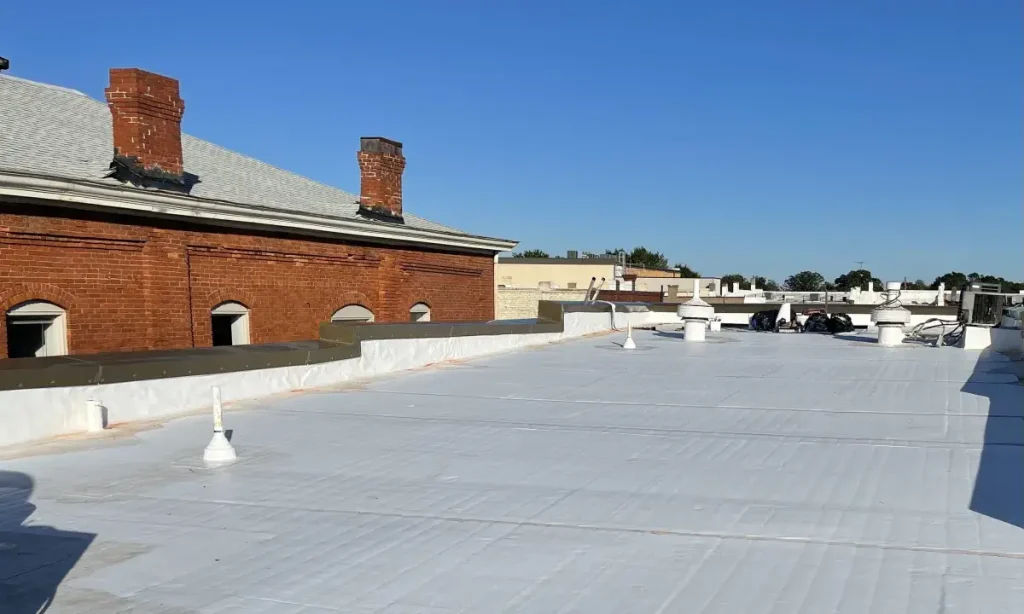
TPO is one of the most widely used commercial roofing materials in the country — and for good reason. It is a single-ply white membrane that reflects solar heat, achieves a Class A fire rating, and is heat-welded at the seams to create a continuous, watertight barrier.
TPO performs well in a wide range of climates, is highly resistant to punctures and tears from rooftop foot traffic, and offers strong long-term performance with proper maintenance. Its reflective surface also contributes to energy efficiency, reducing cooling loads in warm climates.
Best for: Flat and low-slope commercial roofs, buildings prioritizing energy efficiency, new construction and re-roofing projects.
2. EPDM (Ethylene Propylene Diene Monomer) Membrane
EPDM is a rubber-based single-ply membrane with a long and proven track record in commercial roofing. It achieves a Class A fire rating and is known for exceptional durability in extreme temperature swings — making it a strong performer in both very cold and very hot climates.
EPDM is flexible, resistant to UV degradation, and highly resistant to ozone and weathering. It is typically black, which absorbs heat rather than reflecting it, making it better suited to cooler climates or buildings where additional insulation layers are used.
Best for: Flat roofs in northern or variable climates, re-roofing over existing systems, buildings where long-term durability is the primary concern.
3. Modified Bitumen
Modified bitumen is an asphalt-based roofing system that has been reinforced with polymer modifiers to improve flexibility, tensile strength, and fire resistance. It is installed in multiple layers — typically a base sheet, a reinforcing ply, and a cap sheet — and achieves a Class A rating as a complete assembly.
The layered construction makes modified bitumen particularly resistant to both fire and physical damage, and its proven performance over decades makes it a reliable choice for commercial buildings with high durability demands.
Best for: Flat and low-slope roofs in climates with significant temperature cycling, buildings that require a proven, low-maintenance system.
4. Metal Roofing
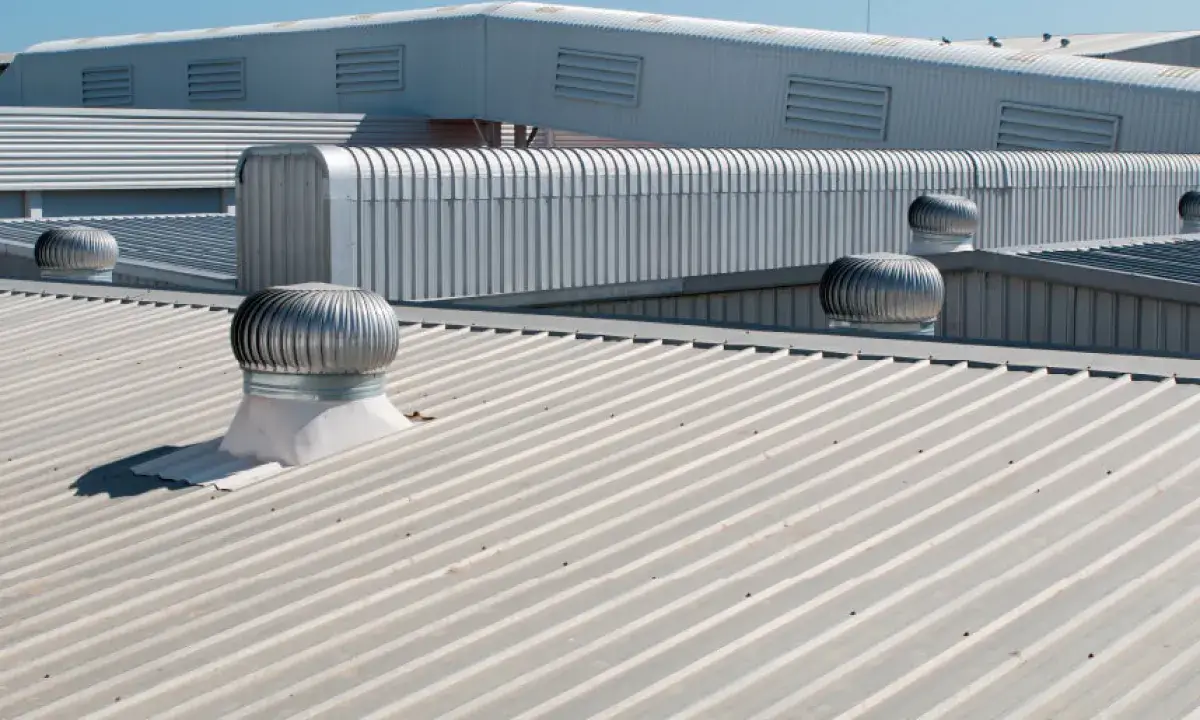
Metal is one of the most fire-resistant roofing materials available for any building type. Steel, aluminum, zinc, and copper panels are all non-combustible — they will not ignite, flame, or contribute fuel to a fire — and achieve a Class A rating as part of a properly assembled system.
Beyond fire resistance, metal roofing offers exceptional longevity. A well-installed commercial metal roof can last 40 to 60 years with minimal maintenance, making the higher upfront cost one of the most cost-effective long-term investments in commercial roofing. Metal also handles wind uplift exceptionally well and is suitable for a wide range of slopes, from standing seam low-slope applications to steep-pitch metal panel systems.
Best for: Industrial and warehouse buildings, steep-slope commercial applications, buildings where longevity and low maintenance are the priority.
5. Concrete Tile
TConcrete tile is a Class A fire-resistant material with strong durability and an attractive appearance that suits certain commercial building types — retail centers, hospitality properties, and mixed-use developments where aesthetics matter. Concrete tile is non-combustible and holds up well in high-heat environments.
The key consideration with concrete tile is structural load. These tiles are heavy, and the building’s roof structure must be engineered to support the additional weight. This is a conversation to have early in the planning process with both your structural engineer and your roofing contractor.
Best for: Commercial buildings with sufficient structural capacity, properties in warmer climates, buildings where aesthetics are a key factor.
6. Gypsum Cover Board
Gypsum cover board is not a finished roofing surface — it is an underlayer used beneath the primary membrane or roofing system. It earns its place on this list because it is one of the most effective fire-resistant components in a commercial roofing assembly.
Gypsum is non-combustible and contains chemically bound water within its crystalline structure. When exposed to fire, that water vaporizes and actively slows heat transfer through the roof assembly, providing critical time for fire suppression. Adding a gypsum cover board beneath a TPO or EPDM membrane significantly improves the fire resistance of the complete assembly and often upgrades the system’s overall fire rating.
Best for: Use as part of any commercial flat roof assembly where enhanced fire resistance is required, particularly in buildings storing flammable materials or equipment..
What Is Not Appropriate for Commercial Roofs
A few materials deserve clarification because they are sometimes misrepresented in roofing discussions.
Wood shakes and shingles are Class C materials — highly combustible and entirely inappropriate for commercial roofing. They are increasingly restricted even for residential use in many jurisdictions.
Standard 3-tab asphalt shingles without a fiberglass mat are not suitable for commercial applications. However, it is worth noting that fiberglass-reinforced asphalt shingles — the type used in residential applications — achieve a Class A rating. The material alone does not determine the classification; the specific product and assembly do.
Clay tile (ceramic) and slate (natural stone) are often mentioned together but are distinctly different materials. Clay tile is a kiln-fired ceramic product; slate is a natural metamorphic stone. Both are fire resistant and achieve Class A ratings, but their weight, cost, installation requirements, and appropriate applications differ significantly. Both are better suited to specific residential and architectural applications than to standard commercial flat or low-slope roofs.
How to Choose the Right Fire-Resistant Material for Your Building
No single material is the right answer for every commercial building. The best choice depends on several factors working together:
Roof slope. Flat and low-slope roofs require membrane systems like TPO, EPDM, or modified bitumen. Steeper commercial roofs open up options like metal, tile, or shingles.
Climate. Reflective membranes like TPO perform well in hot climates. EPDM and modified bitumen hold up better in cold climates with significant freeze-thaw cycling. Metal performs reliably in virtually any climate.
Building use. Buildings that store flammable materials, have high occupancy, or carry significant liability exposure should prioritize the highest-performing Class A assemblies available — including gypsum cover board underlayment for added protection.
Budget and timeline. Upfront costs vary significantly between systems, but so does lifespan and maintenance demand. A metal roof costs more today and lasts 50 years. A TPO membrane costs less today and performs well for 20–30 years with proper maintenance. Evaluate the cost over the life of the roof, not just the installation invoice.
Local code requirements. Fire rating requirements vary by jurisdiction, building type, and proximity to neighboring structures. Your roofing contractor should be familiar with local code requirements and pull the necessary permits before any work begins.
Work With a Commercial Roofing Contractor Who Knows the Difference
Selecting the right fire-resistant roofing system is not a decision to make from a product brochure. The variables are too specific to your building, your location, and your long-term goals.
At Northpoint Roofing Systems, our commercial roofing team assesses your building’s current condition, structural capacity, local code requirements, and performance demands before recommending a system. We work with industry-leading materials and back every installation with manufacturer certifications and a documented warranty process.
Schedule your free commercial roof inspection today and let us give you a clear, honest picture of your options..
Connect with Northpoint Roofing Systems today to have your roof inspected or upgraded with the industry’s best fire resistant roofing materials.