If you own a home and a commercial property, you already know they require different insurance policies, different maintenance schedules, and different contractors for most trades. Roofing is no different — and the differences go much deeper than size.
Understanding what sets these two systems apart helps you ask better questions, hire the right contractor, and make smarter decisions when repairs or replacement come up. Here is a clear breakdown of everything that separates commercial and residential roofing.
The most fundamental difference: slope
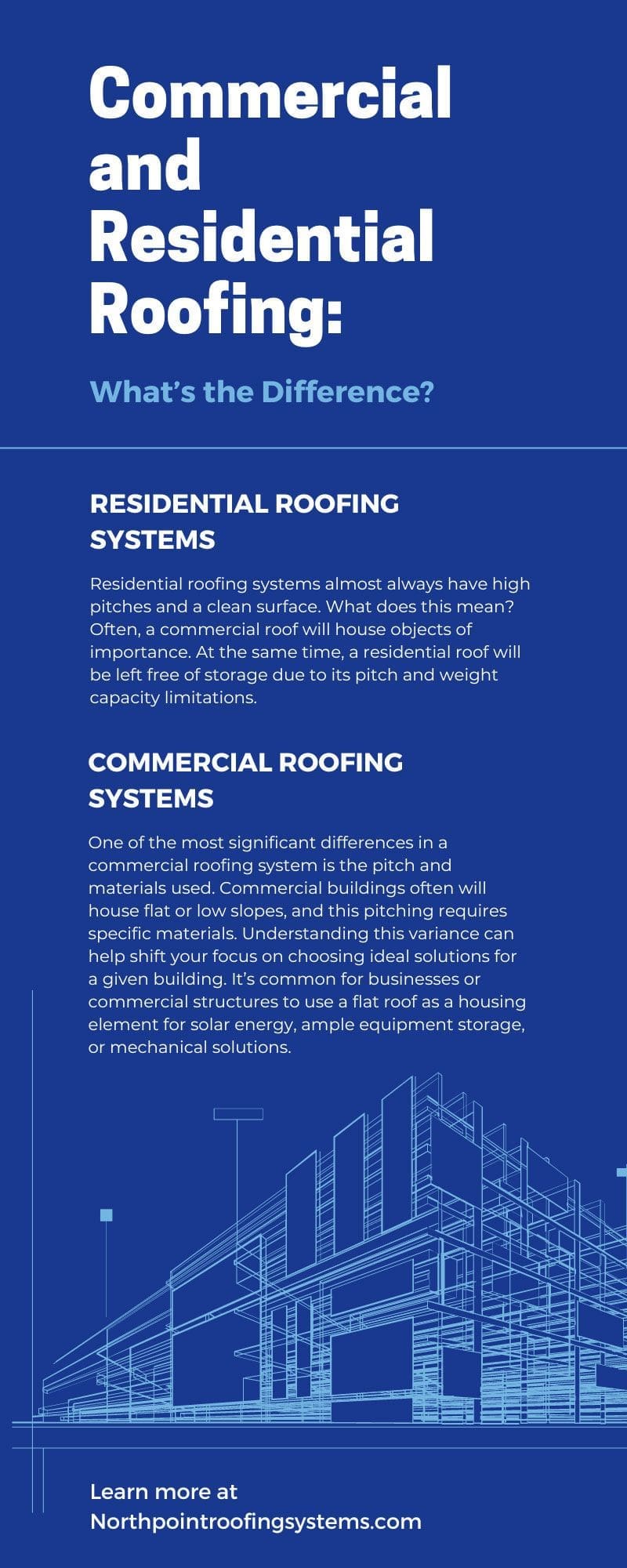
The single biggest structural difference between commercial and residential roofs is pitch — the angle of the roof.
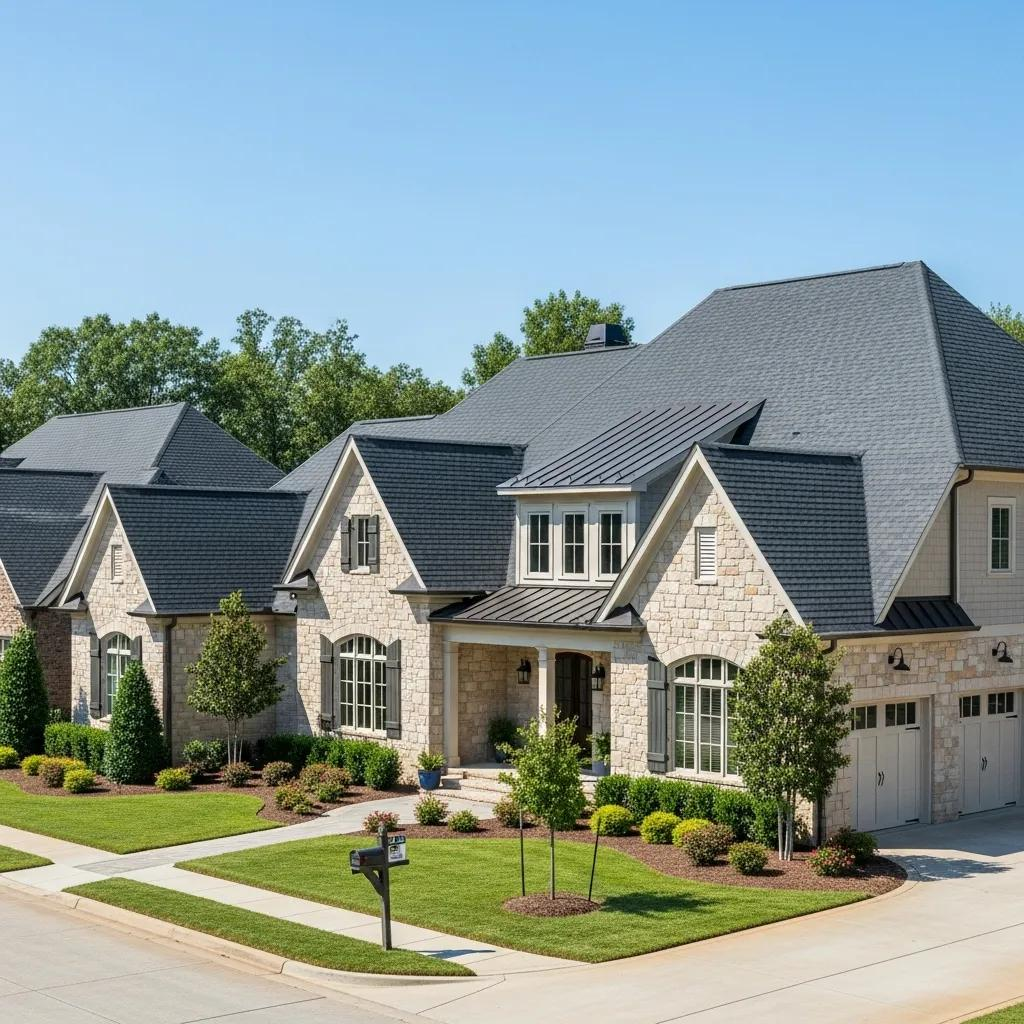
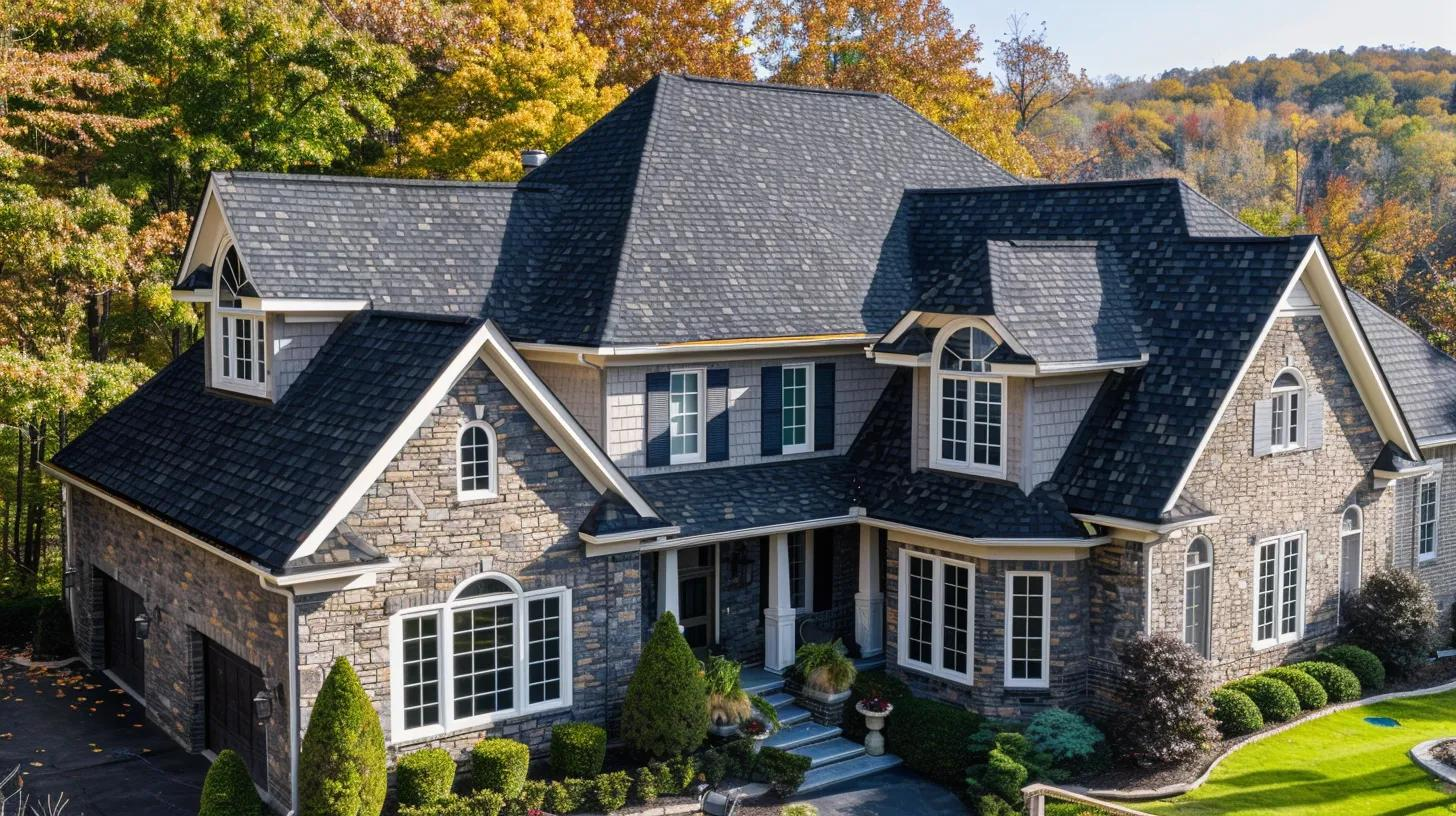
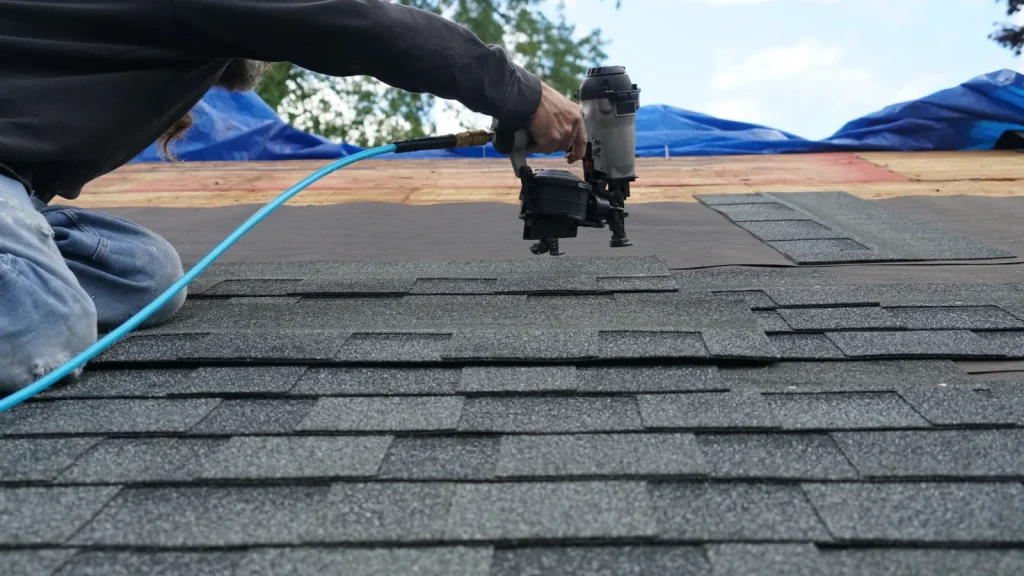
Residential roofs are almost always steeply sloped. That slope serves a purpose: it sheds water and debris quickly, which is why asphalt shingles work so well on a home. Gravity does a large part of the drainage work.
Commercial buildings are typically built with flat or low-slope roofs. This is intentional — flat roofs maximize interior square footage, allow rooftop equipment like HVAC units to be installed out of sight, and in some cases support rooftop gardens, solar arrays, or storage. But flat roofs do not shed water the way pitched roofs do, which means drainage has to be engineered into the system rather than handled by gravity.
This slope difference is why the materials, installation methods, and maintenance requirements for each system are entirely different.
Materials: built for the roof they go on
Residential roofing materials
Asphalt shingles dominate residential roofing because they are cost-effective, widely available, and straightforward to install on a sloped surface. Beyond shingles, homeowners also choose from:
- Architectural (dimensional) shingles — thicker and more durable than standard 3-tab shingles, with a longer lifespan
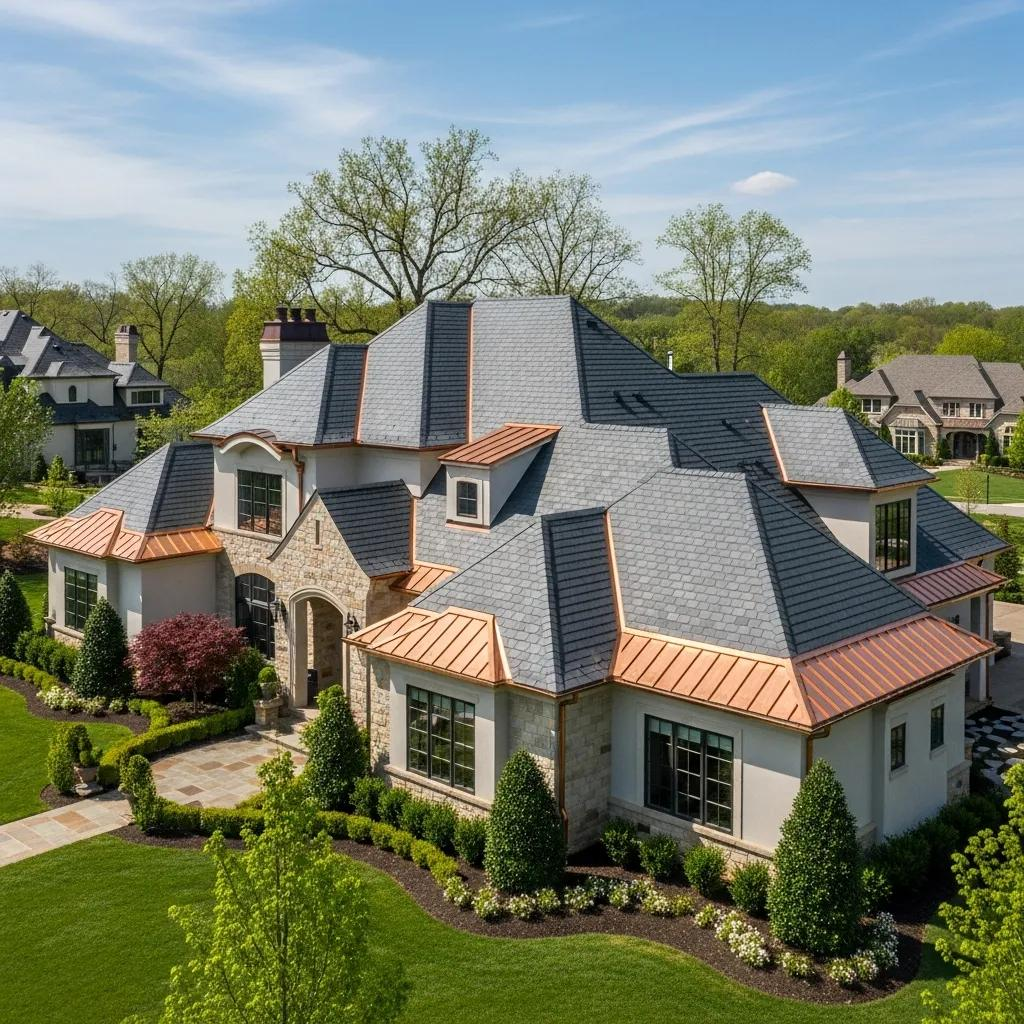
- Metal roofing — standing seam or metal shingles, offering 40–70 year lifespans with strong energy efficiency benefits
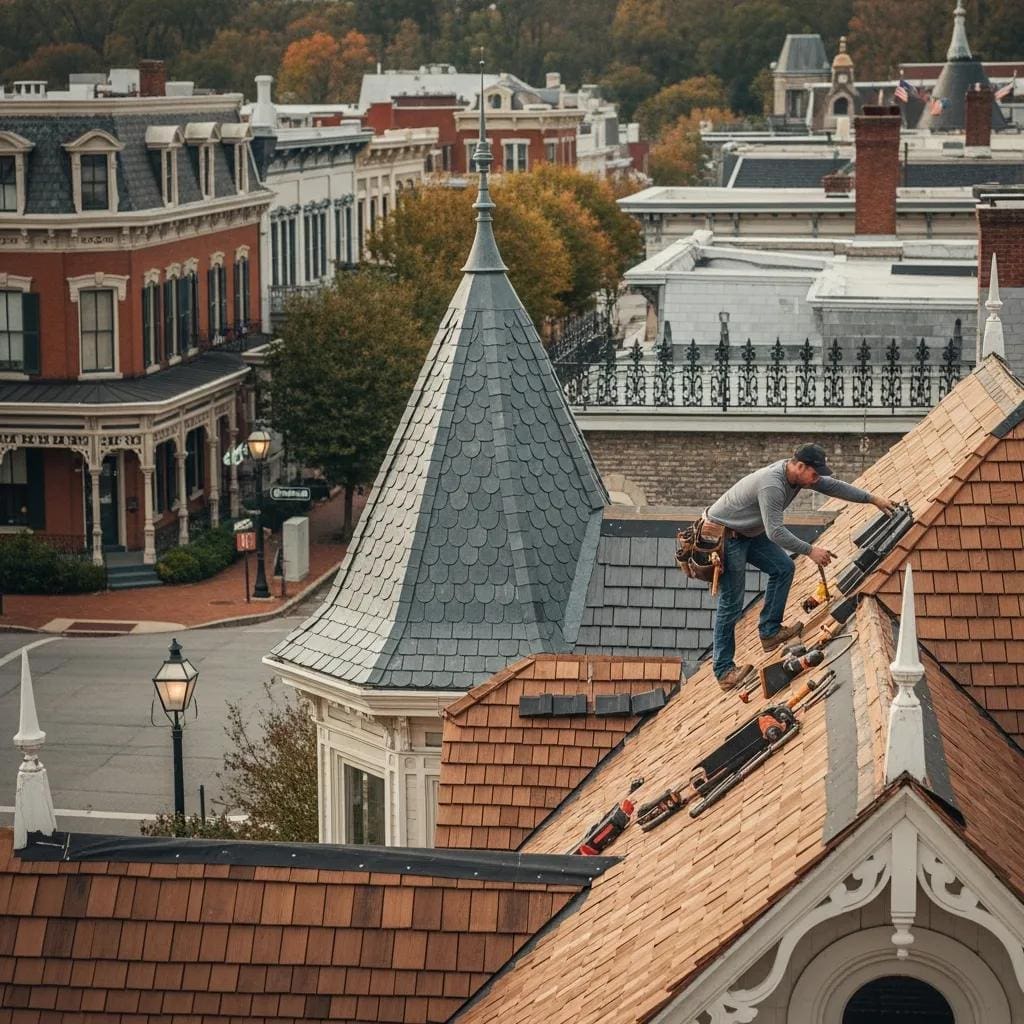
- Slate — premium, natural material with exceptional longevity but significant weight requirements
- Tile and ceramic — common in warmer climates, durable and distinctive in appearance
- Solar shingles — an emerging option that integrates energy generation directly into the roofing material
Commercial roofing materials
Commercial roofing materials are engineered specifically for flat and low-slope applications where water sits longer and the membrane must handle more physical stress from foot traffic, rooftop equipment, and temperature cycling. The most common systems include:
- TPO (Thermoplastic Polyolefin) — a single-ply white membrane that reflects heat and is heat-welded at the seams. One of the most popular commercial roofing systems today due to its energy efficiency and durability.
- EPDM (Ethylene Propylene Diene Monomer) — a rubber membrane, typically black, with excellent weather resistance and a long track record in commercial applications.
- Modified bitumen — an asphalt-based system applied in layers, offering strong durability and flexibility in temperature extremes.
- Built-up roofing (BUR) — alternating layers of bitumen and reinforcing fabric, creating a thick, proven membrane. Commonly finished with a gravel surface.
- Spray polyurethane foam (SPF) — a sprayed insulation and waterproofing layer that conforms to any shape and provides excellent thermal performance.
- Metal roofing — used on commercial buildings with standing seam systems, particularly for warehouses, agricultural buildings, and industrial facilities.
The right material for a commercial building depends on the climate, the building’s use, budget, and the existing roof structure. A qualified commercial roofing contractor will assess all of these factors before recommending a system.
Installation: Scale, Skill Sets, and Time
A residential roof replacement on an average home can be completed in one to two days. The crew size is smaller, the tools are more straightforward, and the system — while requiring real skill — follows a familiar sequence.
Commercial roof installation is a fundamentally different operation. Projects often span multiple days or weeks, involve larger crews, and require specialized equipment. Heat-welding TPO seams, applying modified bitumen torch-down, or installing a spray foam system requires training and certification that not every roofing contractor holds.
This is why hiring a contractor experienced specifically in commercial work matters. A company that primarily does residential shingles is not the right choice for a flat membrane roof — the skill sets, tools, and experience required are genuinely different.
Repairs: Isolated vs. Systemic
When a residential roof leaks, the problem is usually identifiable and contained. A damaged shingle, failed flashing, or a cracked pipe boot can often be repaired in a few hours without disturbing the rest of the roof system.
Commercial roof repairs are more complex for two reasons. First, flat roofs make it harder to trace where water is entering — because water travels laterally under the membrane before appearing as a leak inside the building, the visible damage point and the actual entry point are often in different locations. Second, commercial roofing systems are built in layers — membrane, insulation, and decking — and by the time a leak is visible, moisture may have compromised multiple layers beneath the surface.
This is why thorough commercial roof inspections use core sampling and moisture scanning tools to detect what is happening beneath the surface, not just what is visible on top.
Cost: What Drives the Difference?
Residential roofing is almost always less expensive than commercial roofing, and the reasons come down to size, materials, and labor.
For residential roofs, asphalt shingles remain the most cost-effective option — material costs are lower, installation is faster, and the labor pool is larger. Premium materials like slate or metal cost significantly more but are still installed on a smaller surface area than most commercial jobs.
Commercial roofing costs more because the jobs are larger, the materials are more specialized, the equipment required is more sophisticated, and the crews need to carry more certifications. On a per-square-foot basis, commercial roofing can cost more than residential — and on a large industrial building, total project costs can be substantial.
That said, commercial roofing systems are designed for longevity. A well-installed TPO or EPDM system with proper maintenance can last 20–30 years. A built-up roofing system can last even longer. When the cost is evaluated over the life of the roof rather than just upfront, commercial systems often represent strong long-term value.
Maintenance: The Non-Negotiable Difference
This is where the two systems diverge most significantly in ongoing responsibility.
Residential roofs are relatively low-maintenance. Annual or bi-annual inspections, gutter cleaning, and prompt attention to obvious damage will keep most residential roofs performing well for their expected lifespan.
Commercial roofs require a documented, consistent maintenance program — and many commercial roofing warranties actually require it. Bi-annual inspections in spring and fall, prompt repair of any identified issues, and detailed records of all work performed are standard expectations for commercial property owners. Skipping this maintenance does not just put the roof at risk — it can void the warranty entirely.
How to choose the right contractor
The overlap between residential and commercial roofing contracting is smaller than most people assume. Here is what to look for in each case:
For residential projects, confirm the contractor is licensed in your state, certified by the manufacturer of the materials being installed, carries proper liability and workers’ compensation insurance, and offers a written workmanship warranty. Ask to see examples of completed projects with the specific material you are considering.
For commercial projects, all of the above applies — plus you want to confirm specific experience with your roofing system type, verify that the crew holds the certifications required for the installation method (heat-welding, torch-down, spray foam, etc.), and ask about the contractor’s documentation process for inspection reports, warranties, and maintenance records. For large projects, also ask about bonding.
Financial Differences
The financial differences undeniably set the two systems apart from one another. Asphalt residential shingles remain an industry-leading, cost-effective solution. However, various other materials are available, and they have their pros and cons.
A commercial building requires increased financial means due to the extensive groundwork, size, and design elements, though they generally withstand long-term conditions and can handle much greater weight capacities. Upfront commercial roofs are more expensive. However, when evaluating long-term performance demands, commercial buildings offer more flexibility.
Given the material and design differences, the tools necessary to complete roofing projects will weigh labor costs and job completion. A general commercial roofing project may require heat tools, welding equipment, and any associated personal protection gear that corresponds with the related tools. It’s critical to factor in the labor demands and that the teams necessary to perform these jobs will obtain and possess different skill sets.
The Northpoint Roofing Systems difference
Northpoint Roofing Systems works across both residential and commercial roofing — and we bring the same standard of documentation, craftsmanship, and communication to every project regardless of size.
For homeowners, we handle everything from storm damage repairs and full replacements to solar shingle installations, with a process designed to minimize disruption and maximize the life of your investment.
For commercial property owners and facility managers, we provide thorough inspections using drone technology and AI-assisted imaging, detailed written reports, and roofing solutions built around the specific demands of your building and budget.
Whether you are replacing the roof on your home or managing a commercial property portfolio, the right contractor makes the difference between a roof that performs and one that becomes a recurring problem.
Schedule your free inspection today and let us show you what a professional roofing process looks like from start to finish.