If you own or manage a commercial property, choosing the right roofing material is one of the most important decisions you will make for your building. A flat roof is not just a design choice — it is a long-term investment that affects energy efficiency, maintenance costs, weather resistance, and the overall protection of everything inside.
But with so many commercial flat roofing materials on the market, how do you know which one is right for your building?
This guide breaks down every major option, what each one costs and performs like, and what our team at Northpoint Roofing Systems actually recommends after years of installing and maintaining commercial roofs across Georgia and Tennessee.
What Makes Commercial Flat Roofs Different
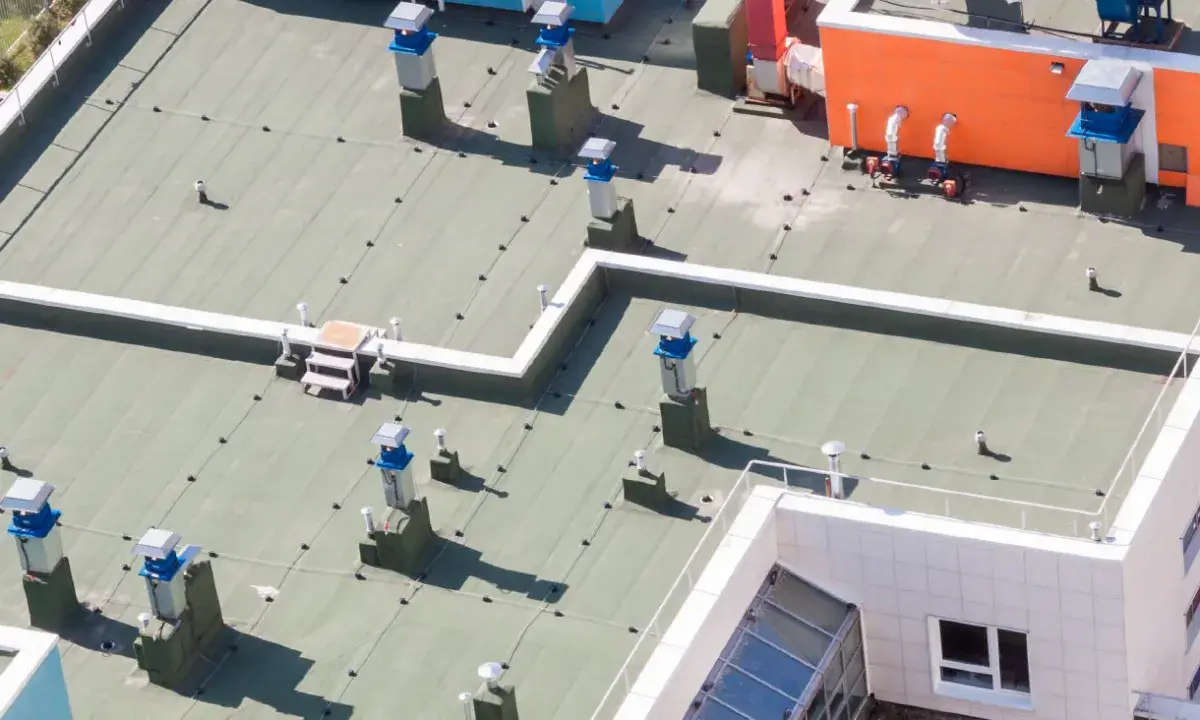
Commercial flat roofs differ from residential roofs in size, shape, and the demands placed on them. Larger surface areas mean more exposure to standing water, UV rays, temperature swings, and debris. The material you choose has to handle all of that while remaining cost-effective to install and maintain over a lifespan of 20 to 50+ years.
Unlike residential roofing where asphalt shingles dominate, commercial flat roofing has several strong material categories — each with real tradeoffs worth understanding before you commit.

The Main Types of Commercial Flat Roofing Materials
1. EPDM (Ethylene Propylene Diene Monomer)
EPDM is a synthetic rubber membrane and, in our professional opinion, the top overall choice for most commercial flat roofing applications.
It has an outstanding track record for durability — properly installed EPDM roofs regularly last 25 to 30 years. The material is highly resistant to UV exposure, extreme temperature fluctuations, and weathering, which makes it especially well-suited for properties in the Southeast where heat and storm activity are year-round concerns.
EPDM is also one of the easier membranes to repair. Damaged sections can be patched without replacing the entire roof surface, which keeps long-term maintenance costs down.
Best for: Commercial properties looking for proven long-term performance and low maintenance costs.
2. TPO (Thermoplastic Polyolefin)
TPO is one of the fastest-growing commercial flat roofing materials on the market, and for good reason. Introduced in the 1990s as a more affordable alternative to PVC, TPO has become a go-to choice for commercial property owners who want energy efficiency without the higher price tag.
TPO is a single-ply membrane made of three bonded layers: a thermoplastic polyolefin base, a polyester-reinforced scrim layer, and a thermoplastic top layer. The white surface reflects heat effectively, which can meaningfully reduce cooling costs in warmer climates.
It is available in different thicknesses and widths, and commercial-grade TPO is typically thicker for added durability. TPO is also one of the least expensive commercial roofing options available, which makes it appealing for large surface areas where material costs add up quickly.
Best for: Property owners prioritizing energy efficiency and cost-effectiveness on larger commercial roofs.
3. PVC (Polyvinyl Chloride)
PVC is a premium single-ply membrane that has been a trusted commercial roofing material for decades. It performs similarly to TPO in terms of heat reflectivity and energy efficiency, but PVC is generally considered more durable and more resistant to chemicals, grease, and fire — making it a particularly strong choice for restaurants, food processing facilities, or any commercial building where rooftop equipment or chemical exposure is a factor.
PVC does come at a higher price point than TPO or EPDM, but for the right application, the additional cost is justified by its performance characteristics and longevity.
Best for: Commercial buildings with rooftop equipment, restaurant exhaust systems, or high chemical exposure environments.
4. Built-Up Roof (BUR)
Built-up roofing is one of the oldest and most established flat roofing systems. A BUR system consists of three or more alternating layers of waterproof material and hot tar, finished with a layer of smooth river gravel on top.
BUR is often one of the least expensive flat roofing options upfront, and the gravel surface provides solid fire resistance. However, these systems are extremely heavy, messy to install, and difficult to repair — particularly if water begins to pond on the surface. For most modern commercial applications, single-ply membranes have largely replaced BUR as the preferred choice.
Best for: Buildings where budget is the primary driver and long-term repairability is less of a concern.
5. Modified Bitumen
Modified bitumen is a single-ply material with a mineral-based outer surface. Traditional installation required heating the adhesive with a torch as the material was unrolled, but newer peel-and-stick versions have made installation easier and safer.
Modified bitumen is moderately priced and often available in white, which improves energy efficiency by reflecting heat. It is a solid mid-range option, though it is generally not as durable as EPDM, TPO, or PVC over the long term.
Best for: Properties looking for a mid-range budget option with some energy efficiency benefits.
6. Metal Retrofit Roofing
Metal roofing is a strong choice for commercial properties, particularly those looking for longevity and minimal long-term maintenance. Common metal materials include aluminum, steel, zinc, copper, and tin panels — all of which offer excellent fire resistance and structural durability.
Metal commercial roofing systems are eco-friendly, energy-efficient, and cost-effective to maintain over their lifespan, which can exceed 40 to 50 years with proper care. Metal works well on low-slope roofs as well as steeper commercial applications, and it provides a clean, modern finished appearance.
The higher upfront installation cost is the primary consideration, but for commercial property owners thinking in terms of 20+ year ownership, metal often delivers strong return on investment.
Best for: Commercial property owners prioritizing longevity, minimal maintenance, and a modern aesthetic.
7. Shingle Roofing for Commercial Properties
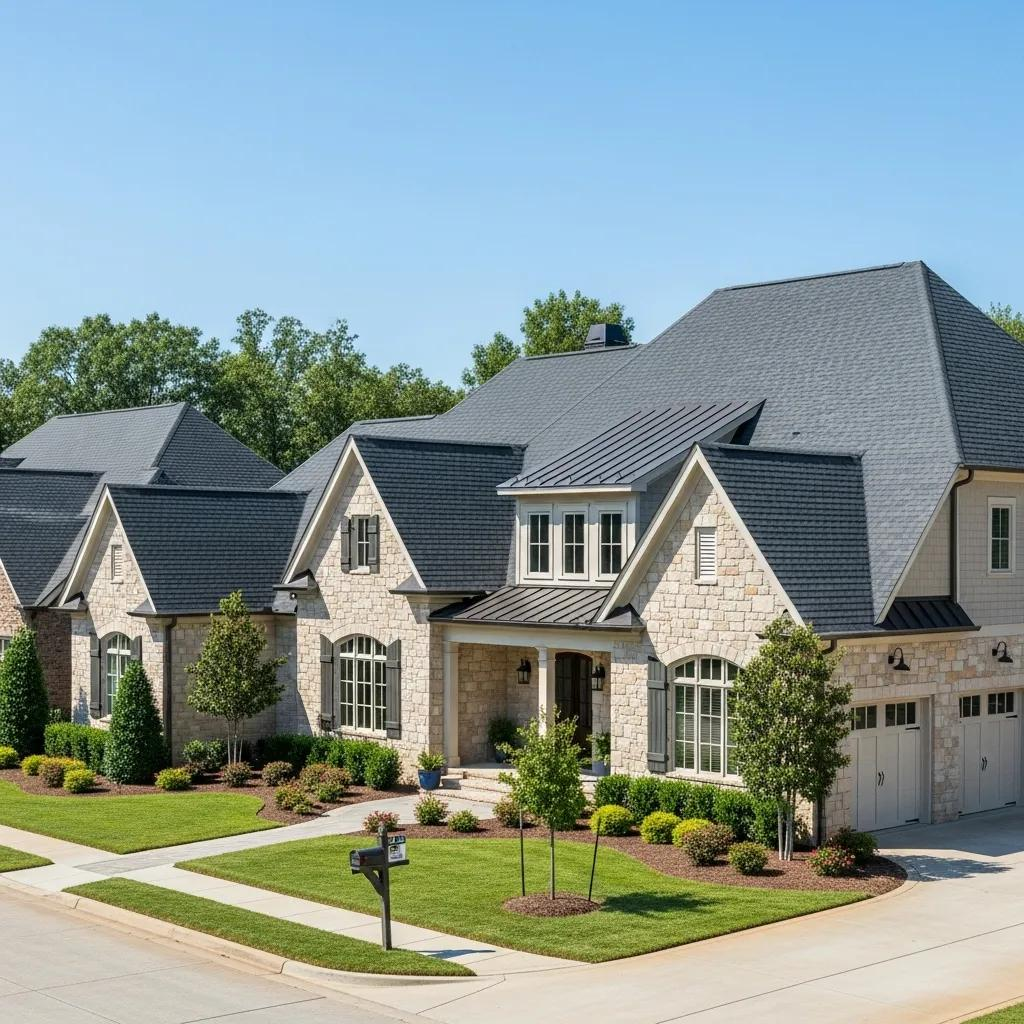
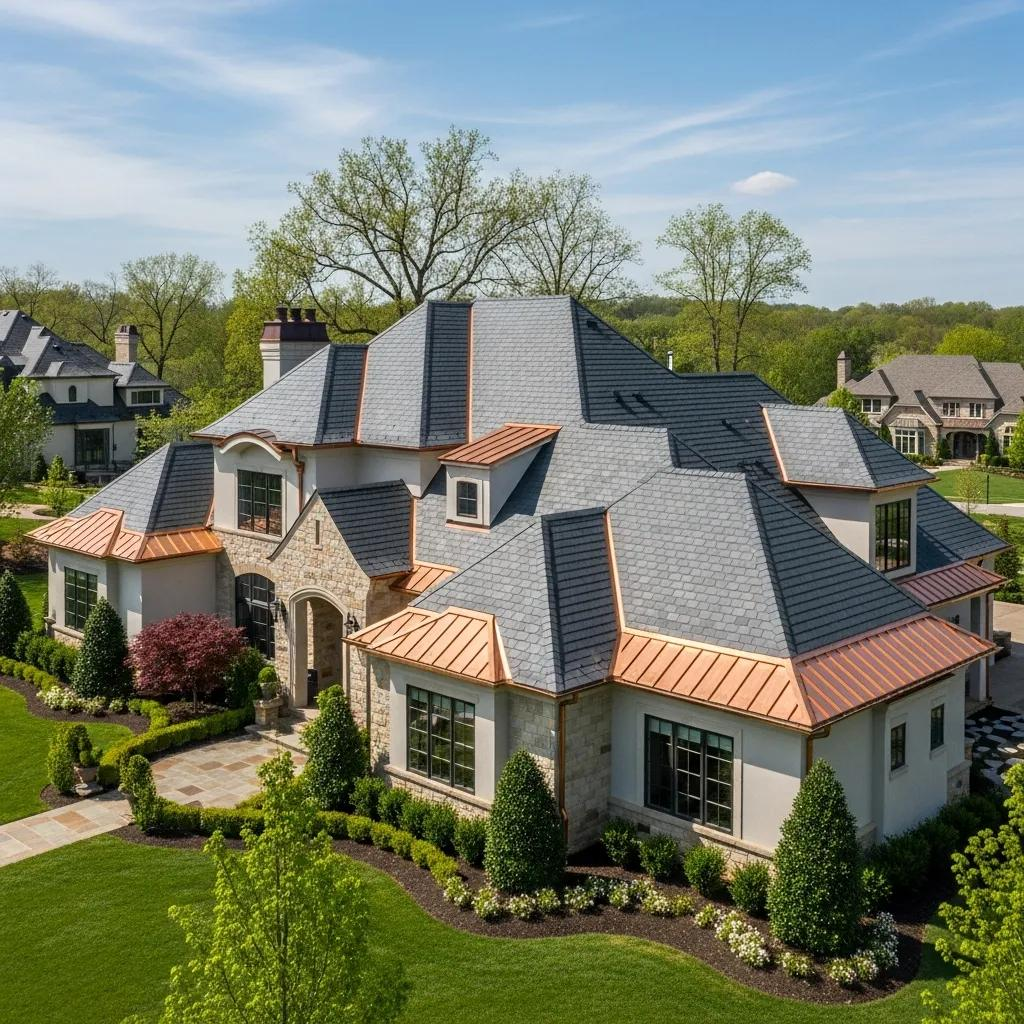
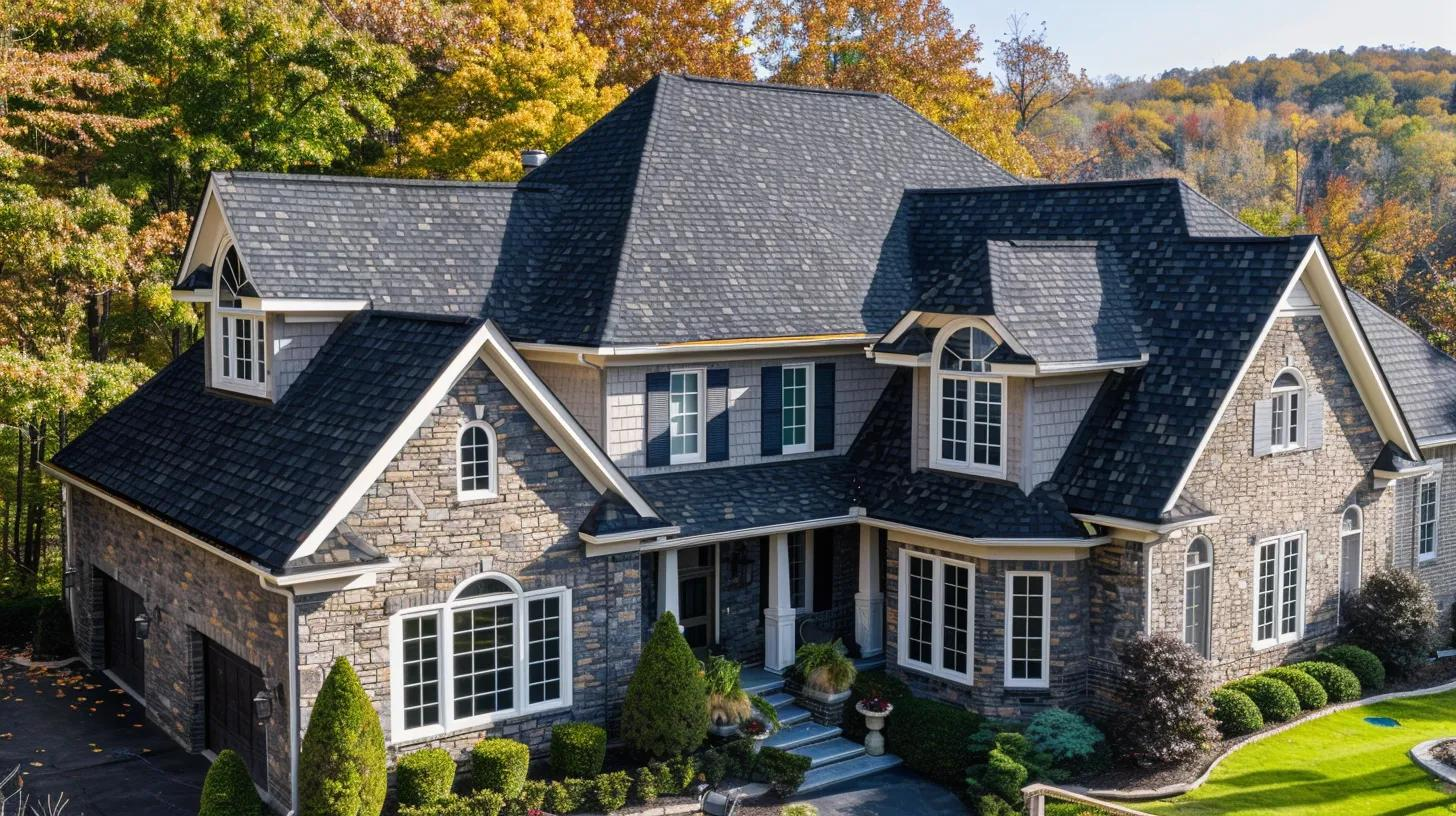
While shingles are most commonly associated with residential roofing, they are a viable option for commercial buildings with sloped or steeper roof lines. Commercial shingle options include composite, ceramic, slate, and plastic varieties — each offering different combinations of cost, durability, and visual appeal.
Shingles are not suitable for true flat roofs, but for commercial buildings with architectural rooflines, they can be an effective and affordable solution that also serves as a design asset.
Best for: Commercial properties with sloped rooflines where aesthetics and affordability are both priorities.
Side-by-Side Comparison
| Material | Lifespan | Cost | Energy Efficient | Best Application |
|---|---|---|---|---|
| EPDM | 25–30 years | Moderate | Moderate | Most commercial flat roofs |
| TPO | 20–30 years | Low–Moderate | High | Large commercial roofs |
| PVC | 20–30 years | Moderate–High | High | Restaurants, chemical exposure |
| Built-Up (BUR) | 15–25 years | Low | Low | Budget-driven projects |
| Modified Bitumen | 15–20 years | Moderate | Moderate | Mid-range budget option |
| Metal | 40–50+ years | High upfront | High | Long-term ownership |
| Shingles | 20–30 years | Low–Moderate | Moderate | Sloped commercial rooflines |
Three Bonus Applications for Flat Commercial Roofs
A flat commercial roof is not just a protective surface — it can also be put to work in three practical ways:
Green Roof Installation: Vegetation on a flat rooftop improves insulation, absorbs rainwater, and can reduce urban heat island effects. Flat roofs are the easiest surface to convert to a green roof system.
Solar Panel Installation: Flat commercial roofs are well-suited for solar panel arrays. While panels perform best at a 30 to 45-degree pitch, mounting systems can achieve the right angle on a flat surface, making it an effective way to reduce energy costs.
Rooftop Terrace or Equipment Platform: With proper planning, flat roofs can accommodate HVAC equipment, rooftop terraces, or additional usable building space.
So What Is the Best Commercial Flat Roofing Material?
There is no single answer that applies to every building — but there is a right answer for your specific property.
For most commercial flat roofing applications, our team recommends EPDM as the top overall performer based on durability, ease of repair, and long-term cost-effectiveness. For property owners where energy efficiency is the top priority, TPO is an excellent and cost-competitive alternative. For buildings with chemical exposure or specialized rooftop equipment, PVC earns the premium it commands.
The right choice ultimately depends on your budget, your building’s specific conditions, local climate, and how long you plan to own the property. That is exactly where having an experienced commercial roofing contractor makes the difference.
Work With Northpoint Roofing Systems
Northpoint Roofing Systems has helped commercial property owners across Georgia and Tennessee navigate these decisions and get the right roof installed right the first time. Our team uses drone inspection technology and AI-powered damage detection software — the same tools trusted by major insurance companies — to assess your current roof and give you an honest picture of what it needs.
We offer free drone roof inspections, full insurance claim assistance for storm-damaged roofs, and the experience to install every material type covered in this guide.
Ready to talk about your commercial roof? Contact Northpoint Roofing Systems today or call 678-345-1711 to schedule your free inspection.