Hiring the wrong roofing contractor is an expensive mistake. The hard part is that most roofers look the same at first. They all have a website, a phone number, and a promise to do great work. The right questions cut through that fast. They help you tell a true pro from a risky hire.
Here are the key questions every homeowner and commercial property owner in Tennessee and Georgia should ask before signing anything.
1. Are you licensed to work in this state?
This one is non-negotiable, for both homes and commercial buildings. A licensed contractor has met the state’s rules for training and accountability. An unlicensed one has not.
Hiring an unlicensed roofer can void your homeowners insurance. It can also leave you with a roof that fails a code check. For commercial owners, the risk is even bigger. An out-of-code job can bring fines, delay occupancy, and create liability for your business.
Always ask for the license number, then verify it. In Tennessee, check the state Board for Licensing Contractors. In Georgia, check the state licensing board. We also pull permits through the City of Franklin, Williamson County, or Cobb County Community Development, depending on where you are.
2. Do you carry liability insurance and workers’ comp?
A “yes” on licensing means little without insurance. Ask for proof of both:
- General liability insurance covers damage to your property during the job. Without it, you file the claim.
- Workers’ compensation covers the crew if someone gets hurt on your roof. Without it, that injury can become your problem.
For commercial jobs, ask about coverage limits too. A small policy may not cover a large project. Ask for a certificate of insurance, and confirm it with the insurer.
3. What warranties do you offer, and what do they cover?
Roofing has two warranties, and you need to understand both.
The manufacturer’s warranty covers the materials — shingles, membrane, underlayment. It is only valid if a certified contractor installs them the right way. So ask if the contractor is certified by the brands they install.
The workmanship warranty covers the quality of the work. This is the contractor’s own promise that the job was done right. Terms vary a lot. A good contractor will put it in writing without being asked.
For commercial roofs, ask about upkeep rules too. Many commercial warranties require documented inspections twice a year to stay valid.
4. Do you use subcontractors? If so, who?
Some roofers use their own crews. Others use subcontractors for part or all of the job. Neither is automatically bad. But you have the right to know who will be on your property.
If they use subcontractors, ask if those crews carry their own insurance. Ask if the main contractor has checked their credentials and seen their past work. On commercial jobs this matters even more, since several crews may be involved.
5. Do you have experience with this type of roof?
Home roofing and commercial roofing are different trades. The materials and methods are not the same.
- Homeowners should ask if the contractor has worked with your material — like asphalt shingles, metal, or slate. Ask to see photos of similar jobs.
- Commercial owners should ask about your system — like TPO, EPDM, or metal. A contractor who mostly does homes is not right for a flat commercial roof. Ask how many similar jobs they have done in the past year.
6. Can you work directly with my insurance company?
If a storm, hail, or wind damaged your roof, this question is key. Middle Tennessee and North Georgia both get strong storms, so claims are common here. A contractor who has handled many claims is a big help.
They can document the damage the right way. They can speak the language adjusters expect. And they can cut down the back-and-forth that slows claims down. Commercial owners should ask if the contractor has done commercial claims, which work differently than home claims.
7. What safety steps do you take?
This matters on every job. It matters even more on commercial work, where crews are larger and OSHA rules apply. (OSHA is the federal workplace safety agency.)
A pro should be able to explain their fall protection, how they secure the work area, and how they handle rooftop hazards. A vague answer is a red flag. For commercial sites, ask how they will protect your tenants, staff, and customers from noise and debris.
8. Will I get a written estimate? What’s in it?
Never accept a verbal quote. A written estimate protects you. It sets the scope, materials, timeline, and cost before any work starts. A good estimate should include:
- The exact materials (brand, product line, color)
- The full scope of work — tear-off, decking check, flashing, cleanup
- Start and finish dates
- Payment schedule and total cost
- What is and is not included
Commercial owners should also ask for a labor-vs-materials breakdown, and whether permits or inspections are included.
9. How do you inspect and document the roof?
This question separates contractors who show their work from those who just ask you to trust them.
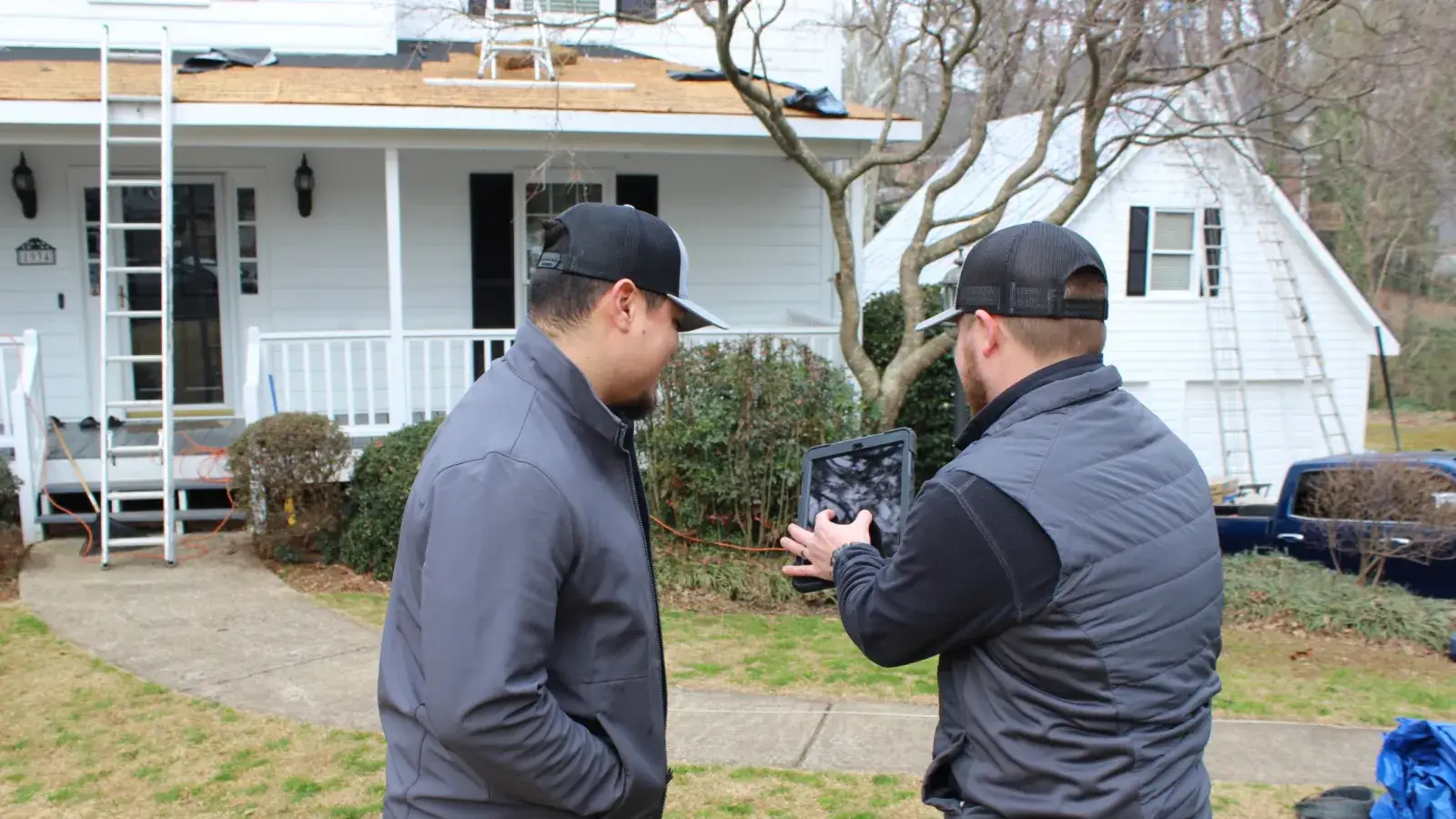
Before the job, a pro should document your roof’s current condition. That means photos, written findings, and often drone imaging or AI damage assessment. This record protects you if a dispute comes up. After the job, ask what you will receive — at least photos of the finished work and your warranty paperwork.

Why Northpoint Roofing
At Northpoint Roofing, we answer every one of these questions before you ask. We are fully licensed and insured in both Tennessee and Georgia. We are certified by leading manufacturers and work on both home and commercial roofs. Our inspections use drone tech and AI imaging, and we explain every finding in plain language.
Whether you are a homeowner dealing with storm damage or a manager planning a big project, we work around your schedule. We serve Franklin, Kennesaw, and the nearby areas.
Schedule your free inspection or call 678-345-1711 today.
FAQ’s