
Modern homeowners recognize the significance of a well-structured and installed roof for protection, comfort, and value. Roofs are essential physical barriers standing between the interior spaces of one’s home and the outside world. A quality roof provides necessary protection against rain, hail, snow, or falling debris and tree branches—not to mention moisture issues. A roof that’s in good condition helps prevent leakage and the potential development of mold and mildew. Even a small-scale leak in the roof line can cause large-scale problems in the home.
Considering an upcoming roofing project to provide better protection, increase home value, or improve energy efficiency? Having a professional roofing contractor inspect and identify damaged components that need repair or replacement is a top priority. A visiting contractor can work with you on a project to enhance your roofing system for safety, appearance, and home improvement purposes.
We’ve compiled a general checklist outlining all the must-do preparation tasks, so you can be 100 percent ready before company arrives—and ensure the service call unfolds as smoothly as possible. Here’s how to prepare your home for a roofing contractor visit.
Preparing the Exterior of Your Home
When it’s time to call in the pros to inspect, consult, and replace your worn-out roof, a little prep work helps everything go smoothly and safely. The goal is simple: give your roofers cleared space, accessible power, and easy roof entry so they can set up their ladders, tools, and safety gear and get to work right away.
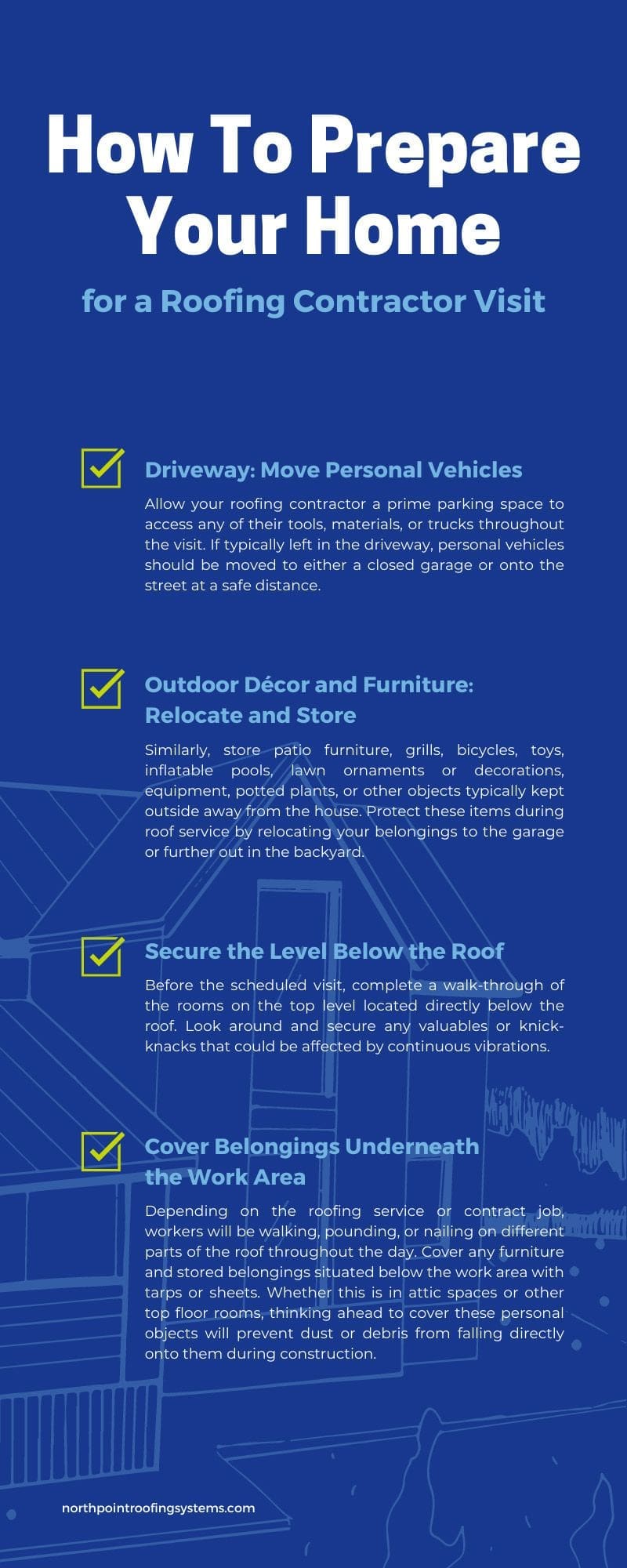
Start with the driveway—move personal vehicles into a closed garage or onto the street at a safe distance, giving the crew a prime spot for their trucks and materials (and protecting your cars from falling debris). Do the same with anything kept outside: relocate patio furniture, grills, bikes, toys, lawn ornaments, and potted plants to the garage or far end of the yard. If you have a satellite dish or antenna on the roof, contact your provider ahead of time so they can remove it before work begins and reinstall it afterward.
Finally, tend to the landscaping. No matter how careful the crew is, some debris will fall, so cover nearby plants and shrubs, trim any overhanging branches that could get in the way, and mow the lawn short to make cleanup easier. Check with your contractor on which of these steps apply to your specific project.
Want this localized for TN and GA, simplified for Flesch-Kincaid, or dropped into a Word doc?
Preparing the Interior of Your Home
Keep in mind that any vibrations from machinery or roofers hammering on top of the roof will travel through the walls of the home. This occurrence is common when replacing or repairing the existing decking; therefore, you’ll need to prepare the interior of your home properly to safeguard your belongings.
Secure the Level Below the Roof
Before the scheduled visit, complete a walk-through of the rooms on the top level located directly below the roof. Look around and secure any valuables or knick-knacks that could be affected by continuous vibrations. For example, remove items on the wall, such as paintings or pictures, as a precaution. Consider securing light fixtures or other decorative objects hanging from the ceiling.
Cover Belongings Underneath the Work Area
Depending on the roofing service or contract job, workers will be walking, pounding, or nailing on different parts of the roof throughout the day. Cover any furniture and stored belongings situated below the work area with tarps or sheets. Whether this is in attic spaces or other top floor rooms, thinking ahead to cover these personal objects will prevent dust or debris from falling directly onto them during construction.
Other Priority Considerations
Preparing your home for a roofing contractor’s visit is mostly about safety and comfort. Roof work is noisy and takes experienced crews time to do right, so plan ahead for your family, kids, and pets—and give your neighbors a heads-up about the schedule. A little prep keeps everyone comfortable and safe while the work is underway.
From there, the key is communication. You can’t predict every setback, but you can stay involved: ask the crew questions, understand what’s happening on your property, and trust your contractor’s expertise. Above all, hire an experienced local contractor you can trust to get it right the first time—quality work now saves you thousands later, and a good company walks you through inspection, prep, and installation every step of the way.
That’s where Northpoint Roofing comes in. Serving the metro Atlanta region, we use drone inspections and AI technology to help every homeowner make a well-informed, hassle-free decision. Contact our team with any roofing questions today.
Want this localized for both TN and GA, simplified for Flesch-Kincaid, or dropped into a Word doc like the others?
FAQ