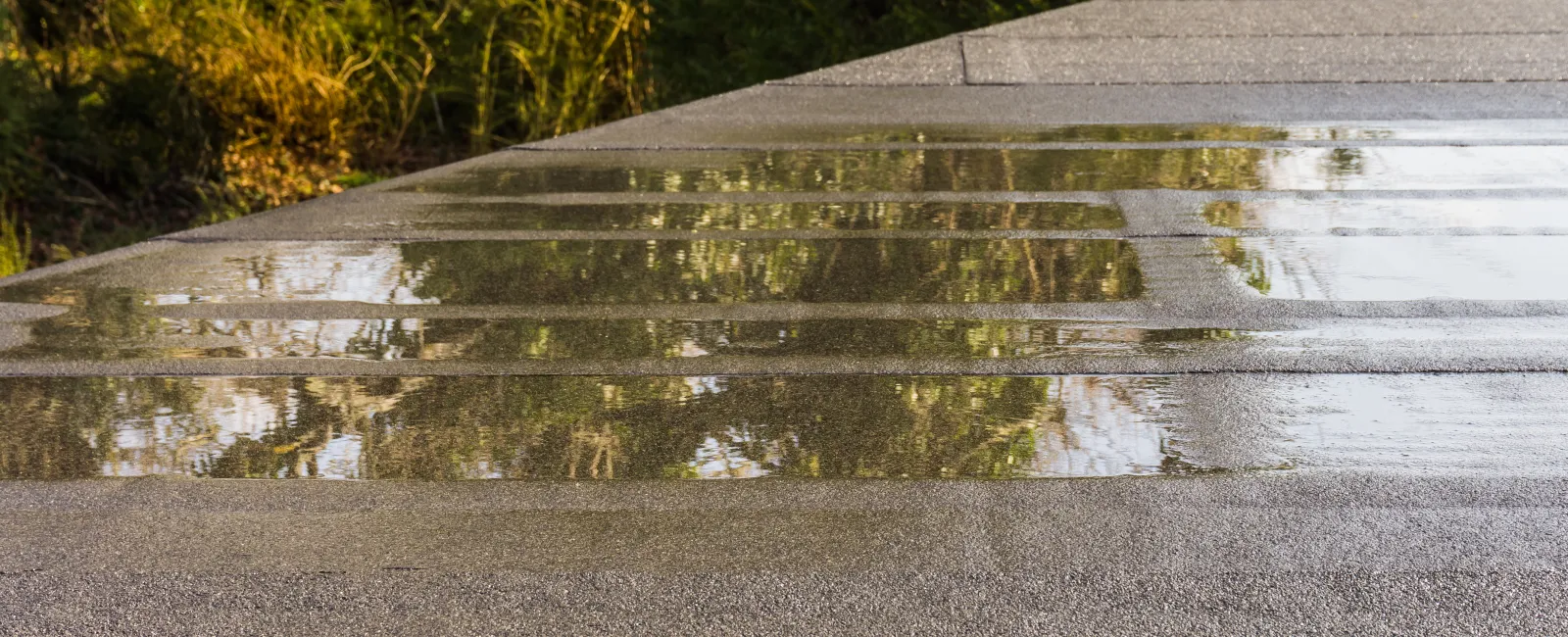
Roof ponding is water that sits on a flat roof for more than 48 hours. A little water after rain is normal. But when it pools and stays, that is a problem. The water has nowhere to drain, and it cannot dry out. Over time, it strains the roof and puts the whole building at risk. This mostly affects flat and low-slope roofs — think commercial buildings, and the odd flat section on a home. Here is what causes ponding, how to fix it, and how to stop it, with tips for Franklin, TN and Kennesaw, GA.
What Causes Ponding Water on a Flat Roof
Ponding can start for several reasons. Here are the ones we see most.
Poor Roof Design
This is a top cause. If the roof is not shaped to move water to the drains, water collects instead. Beams and joists that were not planned well can leave low spots.
Age and Settling
Buildings settle over time. As a roof ages and the frame shifts, low spots form. Water pools in them.
Uneven Layers
Some flat roofs have rubber laid over tar and gravel. If that layer is not level, the slope is off, and water sits.
Crushed Insulation
The soft insulation layer can get pressed down by foot traffic and roof work. Once it is uneven, water pools in the dips. In our area, rain and foot traffic matter far more than snow.
Poor Drainage
Drains and scuppers move water off the roof. In Middle Tennessee and North Georgia, pollen and heavy tree cover clog them fast. A clogged drain is one of the most common causes we see here. Storm damage can make it worse — if a recent storm hit your roof, our storm damage team can help.
How to Fix Ponding on a Flat Roof
There are two main paths, based on the damage.
No damage yet? A spray foam patch is a quick, low-cost fix. A pro sprays foam on the low spot to build the slope back up. The foam must be coated to block UV rays.
Damage already done? Repair or replacement is the safer long-term call. Standing water leads to leaks and can weaken the structure. At that point, a patch only delays the real fix. Our team handles flat roof repair and replacement.
How to Prevent Roof Ponding
Here are proven ways to keep water moving off a flat roof.
- Clean and flush the drains. Clogged drains are the top cause here. Clearing them often solves the problem on its own.
- Add a drain or scupper. A new scupper and downspout helps where water pools near a wall.
- Silicone coating. A silicone coating stands up to pooling water and adds protection. Have a pro apply it.
- Roof crickets. These are raised ridges that steer water away from a low spot and toward the drains.
- Spray foam. Foam builds up the low area so water runs off. It needs a UV-resistant top coat.
- Repitch the roof. A tapered foam-board system adds slope. It is a good fix when a roof has many low spots.
- New membrane overlay. When the roof is aging, a fresh membrane is laid over the top, often with crickets added first.
- Full replacement. This is the biggest step. A new roof can be designed to drain right from day one.
Why Ponding Matters in Our Climate
Middle Tennessee and North Georgia get heavy rain and lots of tree pollen and debris. Both clog drains and leave water sitting. We see little snow, so the real local risk is rain that cannot drain, not snow load. In our humid climate, standing water also speeds up wear and can grow algae and mold. Catching it early saves money.